
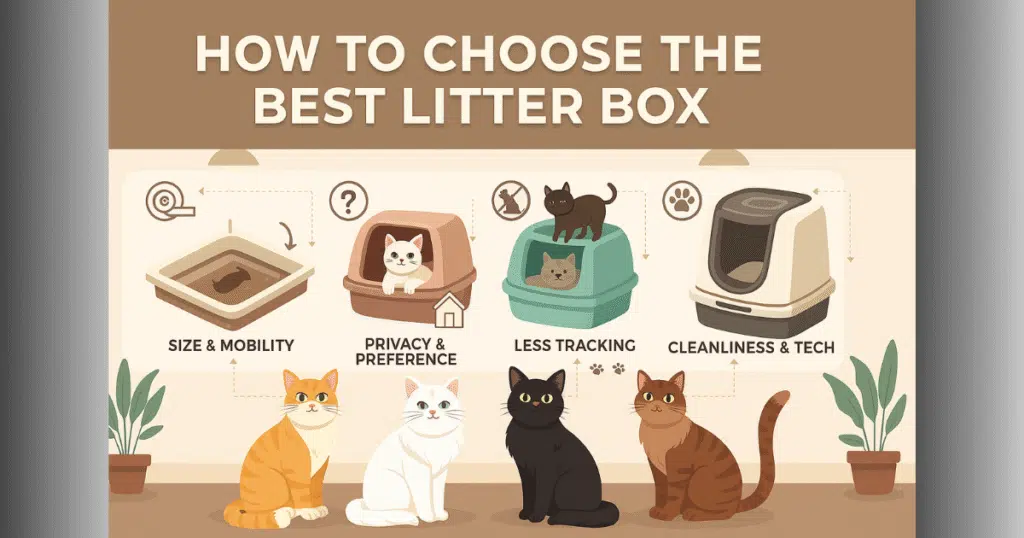
- Introduction
- 1. Why the Right Litter Box Matters for Your Cat
- 2. Why Many Cats Avoid Certain Litter Boxes
- 3. Common Problems Cats Face With Wrong Litter Boxes
- 4. What Type of Litter Box Should You Choose? (Complete Comparison)
- 5. What Is the Ideal Size of a Litter Box? (Most Important Factor)
- 6. How to Choose the Right Litter Tray Based on Cat Type
- 7. Litter Material: Which Litter Type Is Best?
- 8. Litter Box Placement: Where Should You Put It?
- 9. Litter Box Hygiene & Maintenance
- 10. DIY Options
- 11. Troubleshooting: Why Your Cat Avoids the Litter Box
- Conclusion
- FAQs
Introduction
Choosing the right litter box is more than just picking a container for your cat’s bathroom needs. A properly designed litter box impacts cat behavior, hygiene, and overall well-being. Cats are naturally clean animals, and their litter box setup directly affects their comfort, stress levels, and even your home’s cleanliness. A poor choice can lead to house soiling, behavioral issues, and frustration for both cat and owner.
This guide will walk you through everything you need to know to select the perfect litter box for your cat. You’ll learn:
- How litter box size and design affect cat comfort
- Differences between open, covered, top-entry, and self-cleaning boxes
- Choosing the right litter type and depth
- Placement strategies to reduce stress and odors
- Special considerations for senior cats, kittens, and multi-cat households
- Maintenance tips for optimal hygiene and odor control
By the end of this guide, you’ll know the best litter box for your cat comfort, health, and happiness.
1. Why the Right Litter Box Matters for Your Cat
Cats have strong instincts around toileting, and the wrong litter box can disrupt these natural behaviors. Understanding why matters:
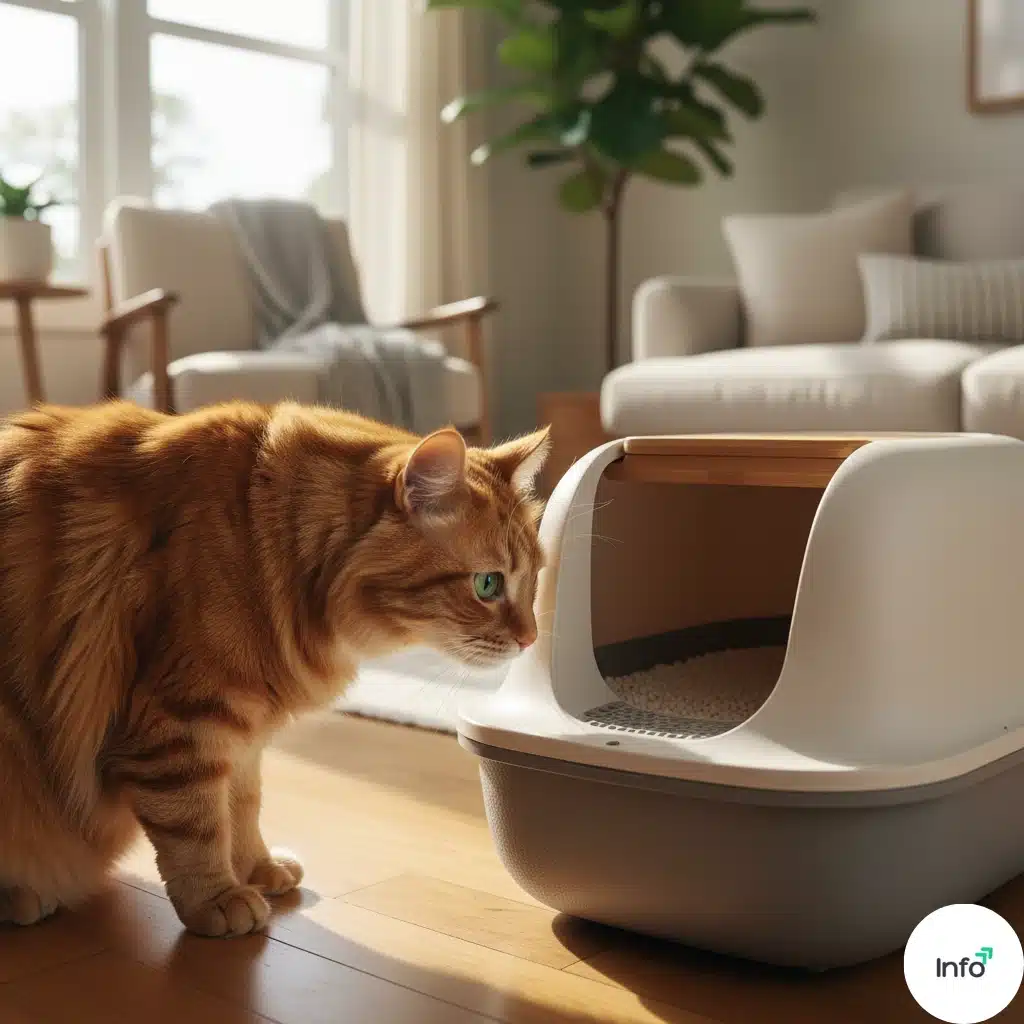
Cat Instincts & Bathroom Behavior
- Cats prefer a clean, quiet, and private area to eliminate.
- Open sightlines allow them to feel safe while keeping an eye on potential predators.
- They instinctively dig and bury their waste, so litter depth and box size matter.
Stress, Anxiety, and House Soiling
- A box that is too small, too noisy, or poorly placed can increase stress and anxiety.
- Stressed cats may develop house soiling, urinating or defecating outside the litter box.
- High-tech self-cleaning boxes can help, but some cats are startled by noise or motion, reducing usage.
2. Why Many Cats Avoid Certain Litter Boxes
Common reasons cats reject a litter box include:
- Too high an entrance for kittens, seniors, or mobility-impaired cats
- Covered boxes that trap odors or block sightlines
- Wrong litter type or texture, e.g., scented vs. fine-grained
- Poor location, such as near noisy appliances or food areas
Key Takeaway: Choosing the right litter box isn’t optional—it directly affects feline behavior, hygiene, and stress levels. A well-selected box encourages proper elimination, reduces odor issues, and keeps your cat happy and healthy.
3. Common Problems Cats Face With Wrong Litter Boxes
Choosing the wrong litter box can create stress for your cat and lead to house soiling or behavioral issues. Understanding common problems helps you avoid mistakes.
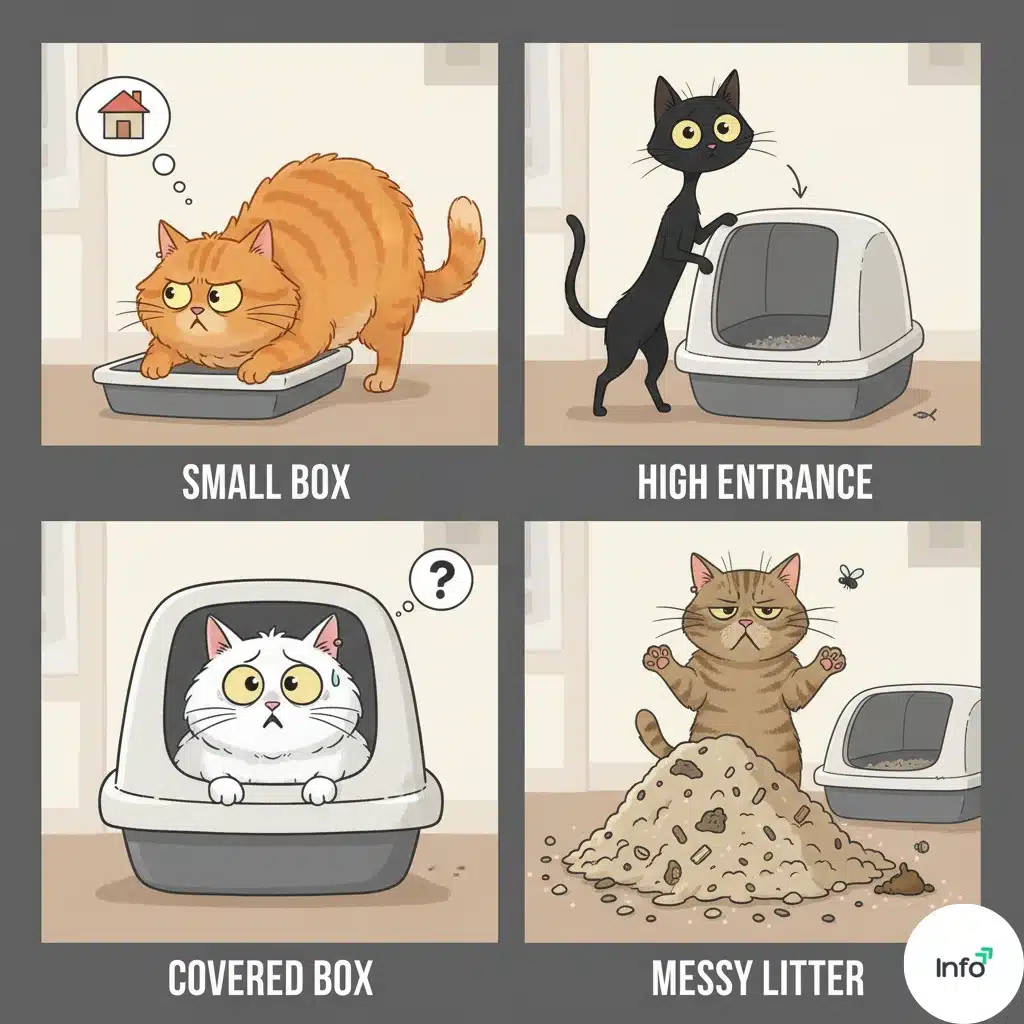
Litter Box Too Small
- Cats need space to turn, dig, and bury waste comfortably.
- A litter box that’s too small can lead to urination outside the box, stress, and frustration.
- Expert tip: A box should be at least 1.5 times your cat’s length to allow natural movement.
High Entrance
- High-sided boxes may block entry for kittens, seniors, or cats with mobility issues.
- Cats with arthritis or limited mobility often avoid high-entry boxes, risking accidents elsewhere.
Covered/Enclosed Causing Stress
- While covered boxes reduce odor spread, they can trap smells and block sightlines.
- Most cats prefer an open view to feel safe and monitor surroundings.
Automatic/Self-Cleaning Issues
- Some cats are startled by noise or sudden movement of automatic litter boxes.
- Compatibility with litter types can be tricky—clumping clay works best for most models.
- Busy pet owners benefit, but not all cats adapt easily to self-cleaning mechanisms.
Pellet/Pad Systems
- Pellet or pad-based systems are convenient for travel or medical use, but many cats reject unfamiliar textures.
- Can lead to messy elimination or litter tracking if the cat refuses to use it.
Unsuitable Litter Depth
- Too shallow: cats can’t bury waste, leading to mess and odor.
- Too deep: kittens or small cats may struggle to enter or exit.
- Rule of thumb: 2–3 inches of litter is ideal for most cats.
Noise/Odor Problems
- Boxes near laundry machines or busy areas create stress.
- Strong odors or poor ventilation may discourage use and increase house soiling.
Key Takeaway: Even small mismatches in size, design, litter, or placement can disrupt your cat’s bathroom habits. Choosing the right box prevents stress, hygiene issues, and unwanted behavior.
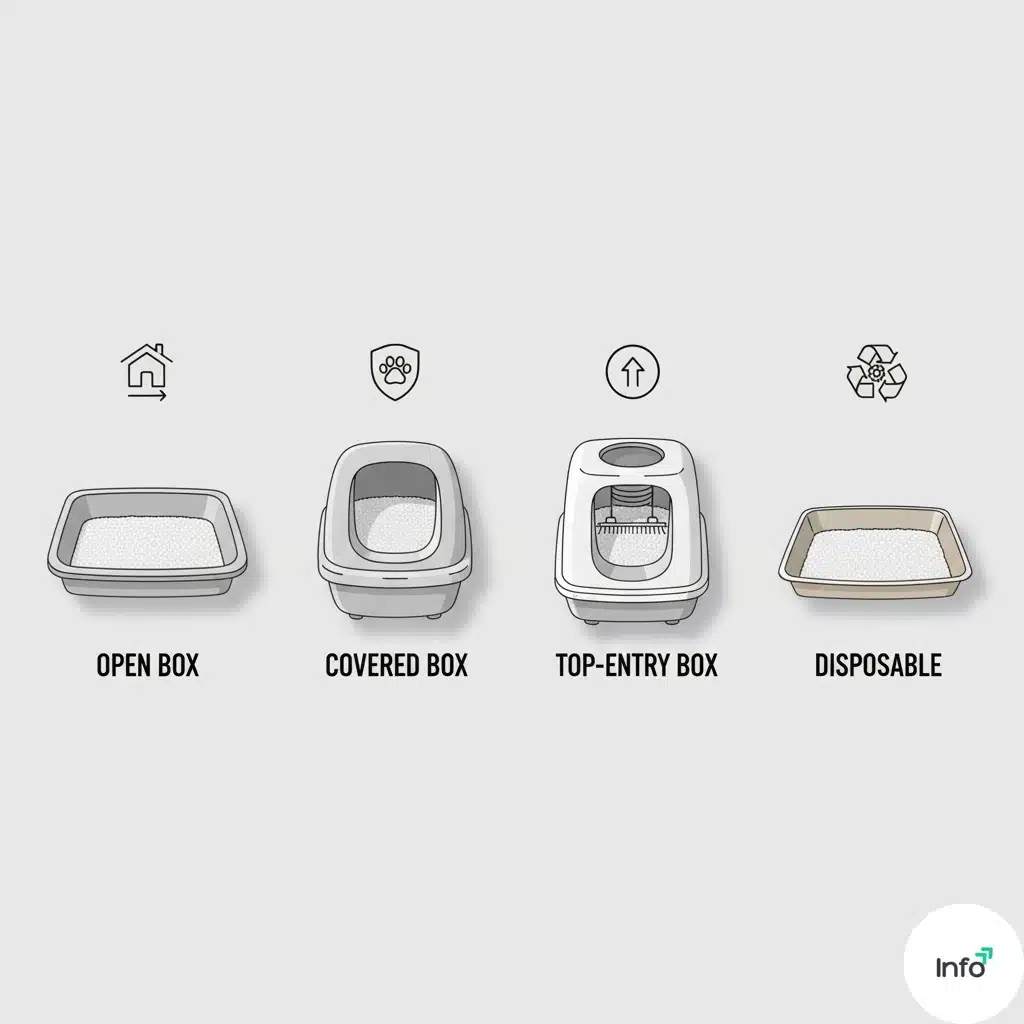
4. What Type of Litter Box Should You Choose? (Complete Comparison)
Choosing the right litter box type depends on your cat’s size, age, mobility, and preferences. Here’s a breakdown:
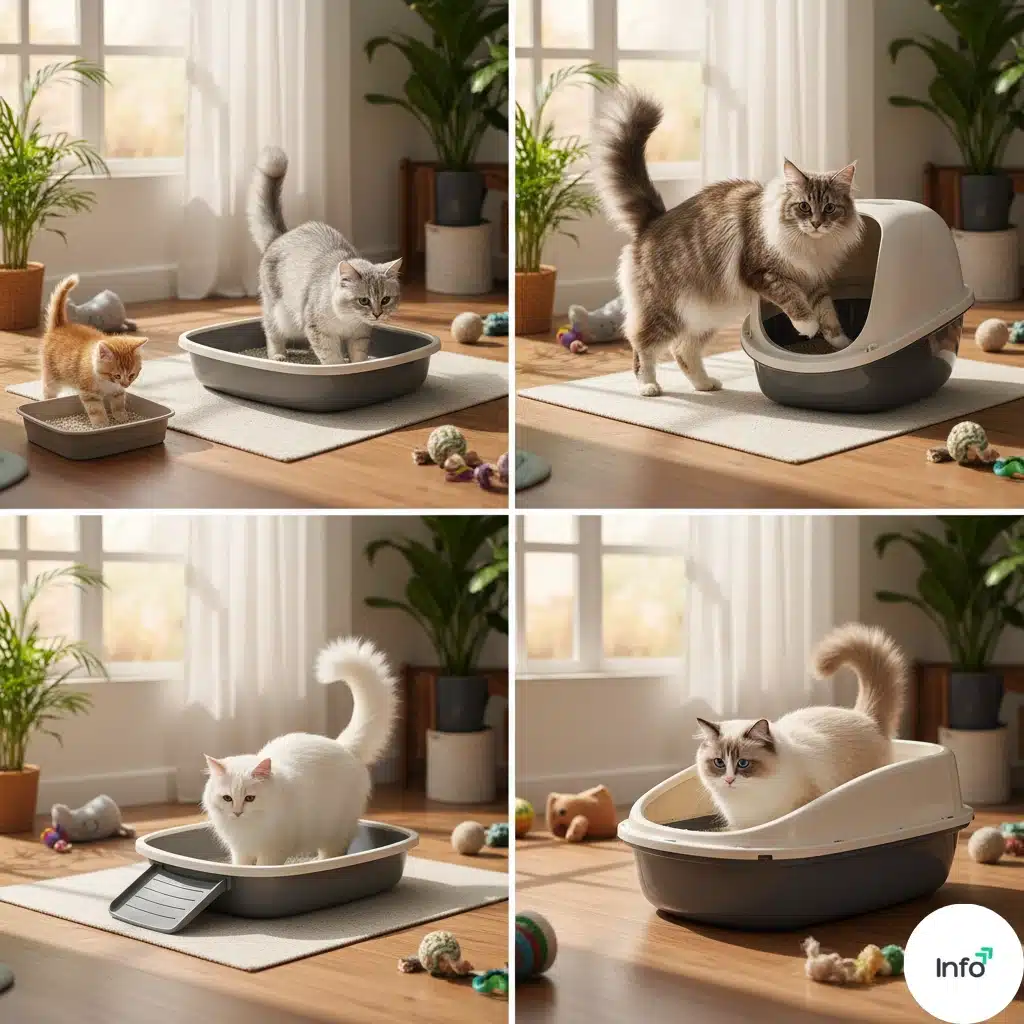
Open Litter Boxes
Pros:
- Easy entry for all cats, including kittens and seniors
- Allows cats to see surroundings, reducing stress
- Simple to clean and maintain
Cons:
- Less odor control
- Litter may scatter outside
Who Prefers Open Trays:
- Most cats prefer unscented, fine-grained litter in open trays with ample space to dig and cover waste.
Covered Litter Boxes
Why Some Cats Hate Them:
- Can trap odors, creating stress and avoidance
- Limits prey-instinct sightlines
When They Work:
- Multi-cat homes needing odor control
- Homes with strong-smelling litter or compact spaces
Choosing between covered and open litter boxes can affect your cat’s comfort and stress levels—learn which type works best for different cats.
Top-Entry Litter Boxes
Benefits:
- Reduces litter tracking
- Limits access for dogs or other pets
Problems for Seniors & Kittens:
- High entrances are difficult for small or mobility-impaired cats
- Not ideal for senior cats with arthritis
Self-Cleaning Litter Boxes
Mechanisms:
- Raking, rotating, or flushing systems
- Removes waste automatically for busy pet owners
Odor Control:
- Many models include carbon filters or advanced odor management systems
Noise Levels:
- Ultra-quiet options prevent startling cats
App-Controlled Features:
- Monitor litter usage remotely
- Track health indicators like frequency of elimination
Best For:
- Owners who want low-maintenance solutions
- Multi-cat households where manual cleaning is cumbersome
Expert Insight: While most self-cleaning boxes work with clumping clay, check litter compatibility before buying.
Disposable & Temporary Litter Boxes
- Ideal for medical cases, post-surgery, or infectious isolation
- Perfect for travel situations or short-term use
- Can be used with pads, pellets, or shredded paper for hygiene and convenience
Key Takeaway: Your cat’s age, size, mobility, and stress tolerance should guide the choice. Open boxes suit most cats, while covered, top-entry, or self-cleaning models serve specific needs.
Litter Box Comparison Table (Types & Pros/Cons)
| Type | Pros | Cons | Best For | Expert Tip |
| Open Box | Easy entry, visibility, simple to clean | Less odor control, litter scatter | Most cats | Use fine-grained, unscented litter |
| Covered Box | Odor control, privacy | Blocks sightlines, traps smells | Multi-cat homes, small spaces | Ventilated removable hood for easy cleaning |
| Top-Entry Box | Reduces litter tracking, keeps dogs out | Hard for kittens/seniors | Single-cat active homes | Ensure entrance height suits your cat |
| Self-Cleaning Box | Low-maintenance, advanced odor control, app features | Noise, some cats scared, litter compatibility | Busy owners, multi-cat homes | Check litter type compatibility before purchase |
| Disposable / Temporary | Travel, medical use, short-term | Not durable for long-term | Post-surgery, isolation, travel | Replace frequently, use pads or pellets for convenience |
5. What Is the Ideal Size of a Litter Box? (Most Important Factor)
Size is one of the most critical factors in choosing the right litter box. Cats need space to turn, scratch, and bury waste, and undersized boxes can lead to house soiling and stress.
Recommended Dimensions
- General rule: A litter box should be at least 1.5 times your cat’s length from nose to base of tail.
- Why bigger boxes work better:
- Provides enough space for digging and covering waste
- Reduces litter scatter and stress
- Accommodates large-boned or long-haired cats comfortably
- Example: A Maine Coon measuring 40 inches long would need a box at least 60 inches long, though slightly smaller boxes can work if depth and width are generous.
Litter Box Shape
- Rectangular: Best for digging and covering waste; accommodates most cats.
- Oval/Round: Ideal for tight spaces, but may reduce digging area.
- Corner boxes: Great for multi-cat homes or small rooms, but cats must feel comfortable turning around.
For cats that tend to kick litter outside the box or live in homes with dogs, a large top-entry litter box can help reduce mess while providing enough space for comfortable movement inside.
How Deep Should the Litter Be?
- Most cats prefer 2–3 inches of litter, allowing them to dig and bury waste naturally.
- Shallow litter may discourage covering; too deep can overwhelm kittens or small cats.
- Expert tip: Observe your cat’s digging behavior and adjust depth as needed. Some cats may prefer slightly deeper litter for scratching instincts.
Key Takeaway: Always choose a litter box spacious enough for your cat’s body, allowing proper digging, turning, and comfort. Shape and litter depth matter just as much as length and width.
Ideal Litter Box Size Chart (By Cat Type)
| Cat Type | Box Length | Box Width | Litter Depth | Notes |
| Small / Kitten | 12–16 in | 10–14 in | 2 in | Shallow entry for easy access |
| Average Adult | 18–24 in | 14–18 in | 2–3 in | Allows digging & turning |
| Large Breed (Maine Coon, Ragdoll) | 30–60 in | 18–24 in | 3 in | Sturdy, extra space for movement |
| Senior / Mobility-Impaired | 18–24 in | 14–18 in | 1–2 in | Low entry, gentle slopes |
| Multi-Cat Homes | One box per cat + 1 extra | Varies | 2–3 in | Well-spaced, prevent territorial disputes |
Tip: Always measure your cat’s length from nose to tail base before buying.
6. How to Choose the Right Litter Tray Based on Cat Type
Different cats have unique needs. Consider your cat’s breed, age, mobility, and health when selecting a litter box.
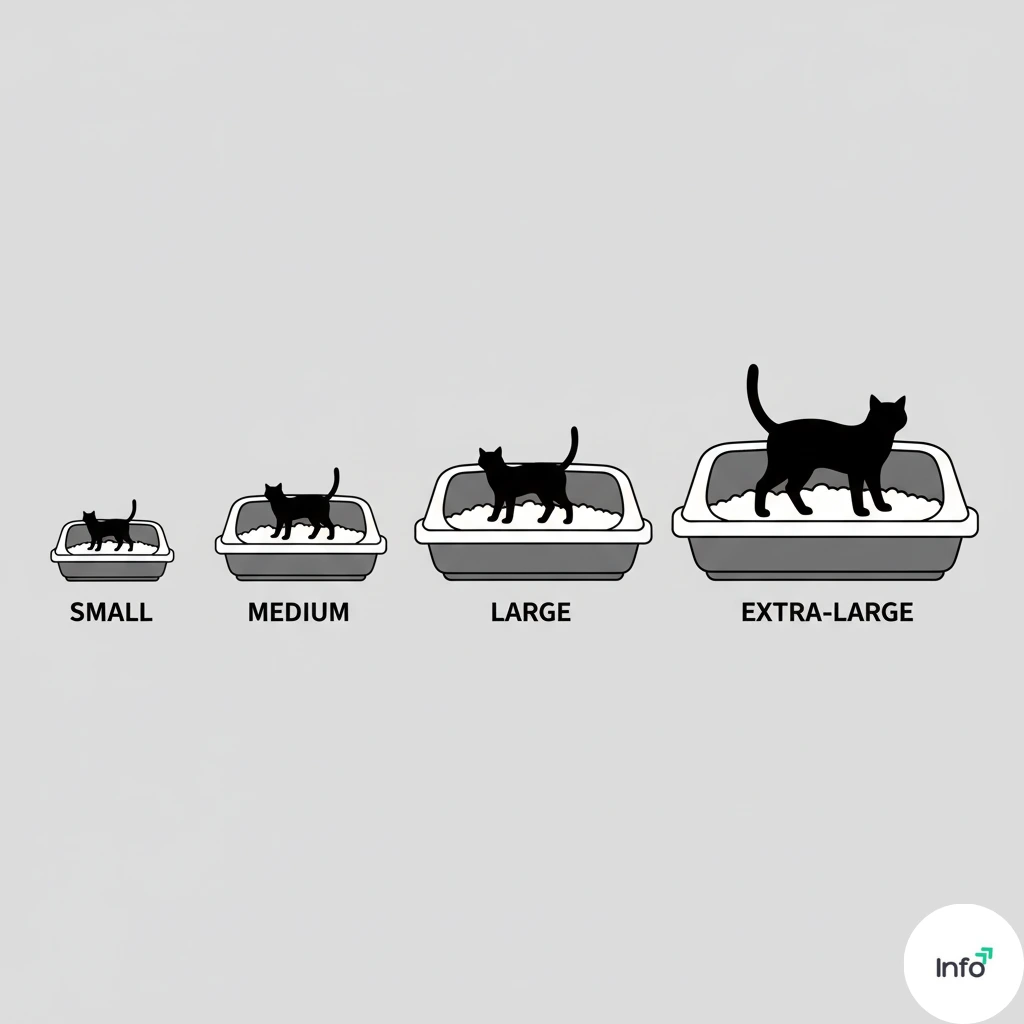
Large Breed Cats (Maine Coon, Ragdoll, etc.)
- Need extra-wide and long boxes for comfort
- High sides or deep litter may be suitable, but ample floor space is key
- Large cats appreciate sturdy construction to handle weight
Larger cats often feel uncomfortable in small trays and usually do better with a large open litter box that allows easy turning and digging.
Senior Cats & Mobility Issues
- Low-entry boxes make it easier for cats with arthritis or mobility challenges
- Wider openings allow easier turning
- Shallow litter and gentle slopes reduce stress and discomfort
Kittens
- Require shallow trays for easy entry
- Small, lightweight boxes encourage early litter training
- Soft, fine-grained litter is ideal for sensitive paws
Multi-Cat Homes
- Follow the rule: one box per cat + one extra
- Helps prevent territorial disputes and house soiling
- Boxes should be well-spaced across the home to reduce stress
Cats With Medical Conditions
- Cats with kidney disease, urinary tract infections (UTIs), or feline idiopathic cystitis (FIC) may need:
- Low-sided, easy-access boxes for painful or frequent urination
- Multiple boxes to reduce competition in multi-cat homes
- Temporary disposable or self-cleaning boxes post-surgery
Key Takeaway: The right litter tray depends on your cat’s size, age, mobility, and health. Choosing a box tailored to their needs improves comfort, hygiene, and consistency in litter use.
7. Litter Material: Which Litter Type Is Best?
Choosing the right litter material is essential for cat comfort, hygiene, and litter box usage. Different litters have unique properties affecting digging, odor control, and tracking.
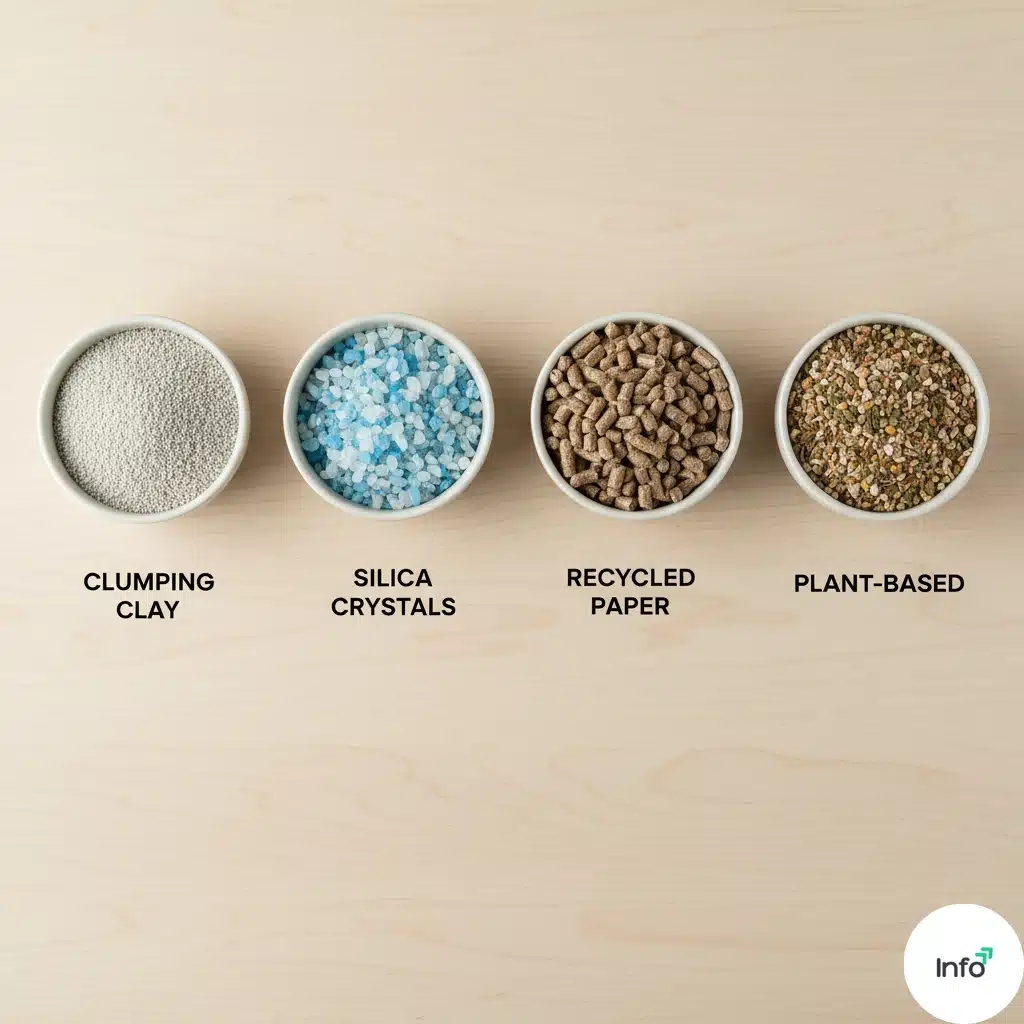
Clumping vs Non-Clumping
- Clumping litter: Forms solid clumps for easy scooping. Excellent for odor control and busy owners.
- Non-clumping litter: Absorbs moisture but requires full replacement more often. Can be gentler on sensitive paws.
- Expert tip: Most cats and cat parents prefer clumping clay litter for daily convenience and cleanliness.
Crystal/Silica Litter
- Made of silica beads or crystals
- Excellent at odor absorption and low tracking
- Some cats dislike the hard texture, so observe your cat’s reaction
Paper Litter
- Made from recycled paper
- Soft and absorbent, ideal for senior cats or post-surgery use
- Biodegradable but may require frequent changing
Plant-Based (Corn/Wood)
- Eco-friendly and lightweight
- Good for clumping and odor control
- Some cats may not prefer texture, especially if used to fine clay
Some cat owners choose plant-based litter made from corn or wood, which offers good odor control while being lightweight and eco-friendly.
Scented Litter Problems
- Strong fragrances can stress cats or trigger avoidance
- Most experts recommend unscented, fine-textured litter to encourage consistent use
What Litter Do Most Cats Prefer?
- Fine-grained, unscented litter, 2–3 inches deep
- Allows natural digging, covering, and scratching behaviors
- Observe your cat’s habits to adjust type or depth as needed
Key Takeaway: Select a litter that balances cat preference, odor control, and cleaning convenience. Most cats prefer unscented, clumping clay or fine-textured plant-based litter.
8. Litter Box Placement: Where Should You Put It?
Placement affects stress, privacy, and odor management. Poorly placed boxes discourage use.
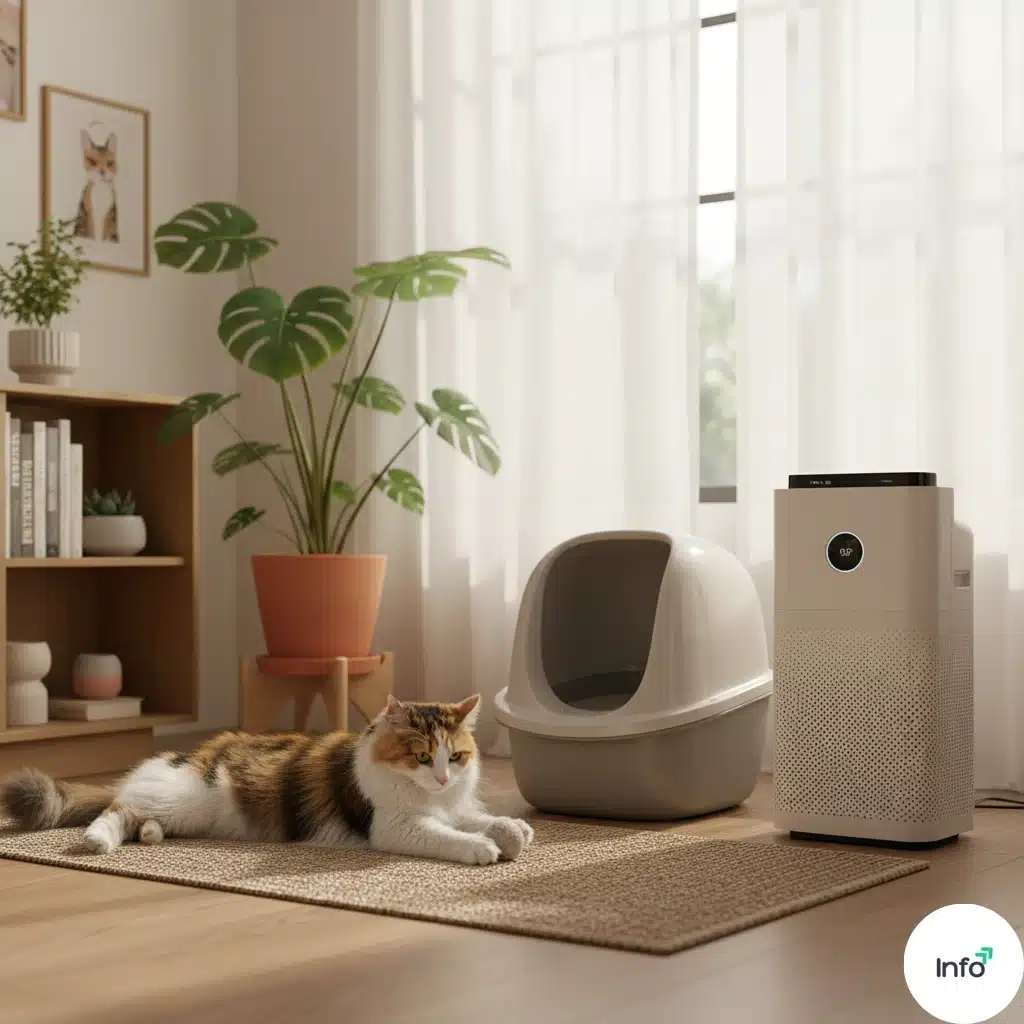
- Quiet area: Avoid busy corridors or noisy rooms
- Avoid washing machines / noisy appliances: Vibrations and sounds may scare cats
- Multi-level homes: Provide one litter box per floor to reduce territorial disputes
- Ventilation & odor control: Well-ventilated areas prevent ammonia buildup and unpleasant smells
Expert tip: Keep litter boxes away from food and water to follow natural cat instincts.
Key Takeaway: Proper placement ensures stress-free elimination, encourages consistent use, and maintains hygiene.
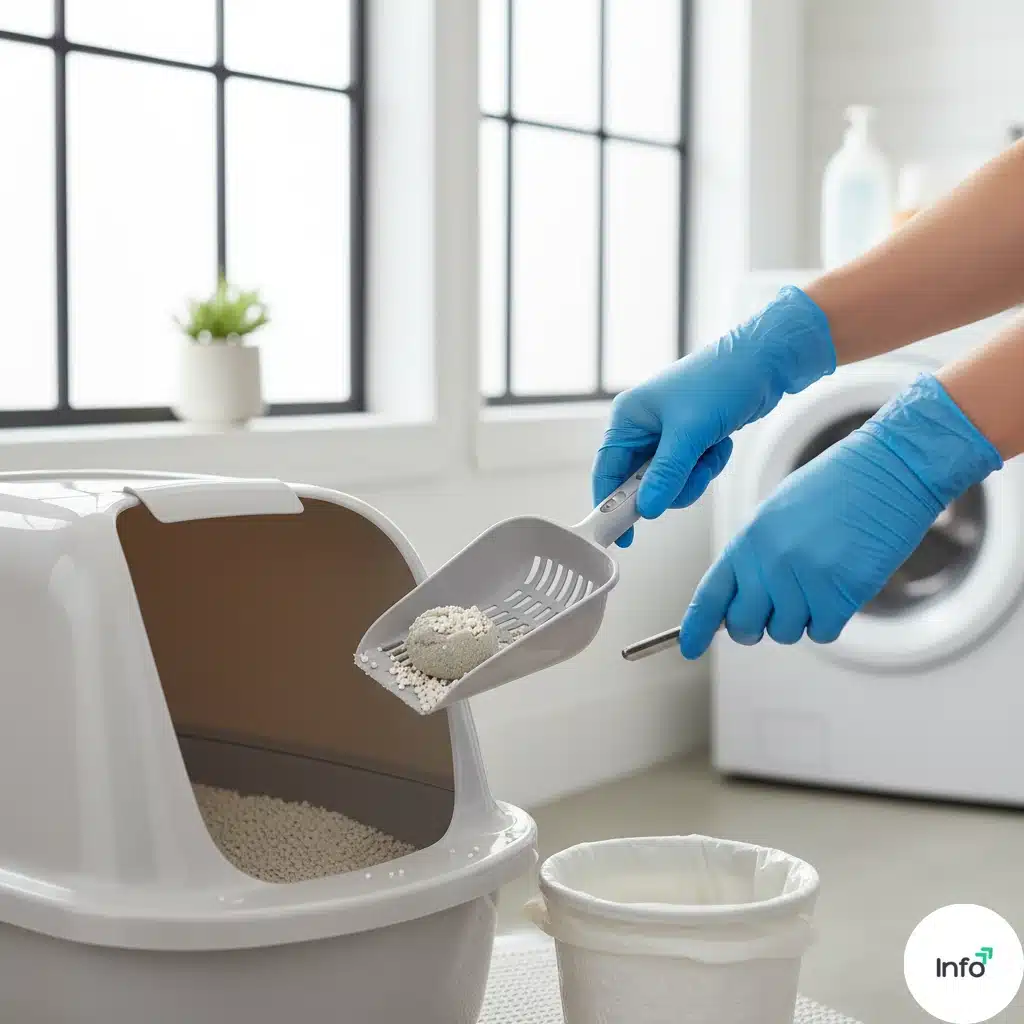
9. Litter Box Hygiene & Maintenance
Maintaining a clean litter box is crucial for cat health, odor control, and preventing house soiling.
How Often to Clean
- Scoop daily for clumping litter
- Remove waste promptly to prevent stress and odor
Deep Cleaning Schedule
- Wash the box weekly with mild, unscented soap
- Avoid harsh chemicals that may repel cats
Liners, Deodorizers, Trays
- Use liners for easy cleaning but ensure they don’t tear
- Odor-neutralizing deodorizers or carbon filters help in multi-cat homes
- Tray design can reduce litter tracking and splatter
When to Replace Your Litter Box
- Replace every 1–2 years or sooner if scratched, stained, or warped
- Cats may avoid old boxes with lingering odors
Key Takeaway: Cleanliness is non-negotiable. Daily scooping, weekly deep cleaning, and timely replacement ensure hygiene, comfort, and proper usage.
10. DIY Options
DIY litter boxes can be cost-effective and tailored to your cat’s needs.
DIY Low-Sided Litter Box
- Use shallow storage bins for kittens or mobility-impaired cats
- Cut a side entrance for easy access
DIY High-Sided Litter Box
- Taller bins prevent litter scatter for large or messy cats
- Ensure ample space inside for digging
How to Cut an Opening in a Storage Bin
- Mark entrance area low enough for easy entry
- Use utility knife safely
- Smooth edges to prevent injury
Key Takeaway: DIY boxes allow customization for size, accessibility, and litter control while being budget-friendly.
Smart & Modern Litter Boxes
Tech-savvy options cater to busy owners and multi-cat households:
- App-controlled: Monitor litter usage and track elimination patterns remotely
- Sensors: Detect cat entry, trigger cleaning, or record frequency for health monitoring
- Noise level considerations: Ultra-quiet models prevent startling cats
- Automatic waste disposal systems: Reduce manual scooping and maintain hygiene
Key Takeaway: Smart litter boxes combine convenience, hygiene, and health monitoring, but ensure compatibility with your cat’s preferences.
11. Troubleshooting: Why Your Cat Avoids the Litter Box
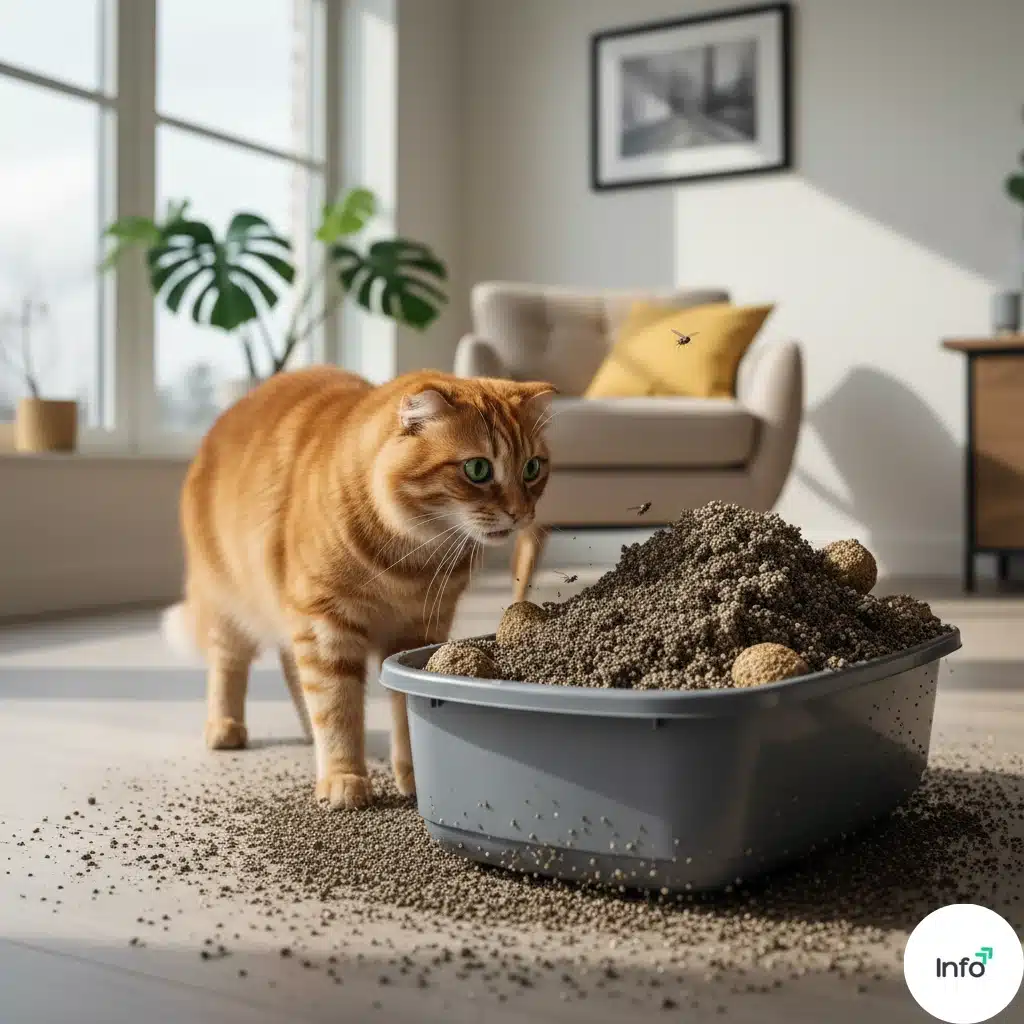
Common reasons for avoidance:
- Stress: New home, other pets, or location changes
- Dirty litter: Cats are clean and refuse unclean boxes
- Strong smells: Scented litter or poor ventilation
- Wrong location: Too noisy, high traffic, or near food/water
- Wrong litter material: Cats reject coarse or scented litter
- Health issues: UTIs, kidney disease, arthritis, or post-surgery pain
Expert Tip: If problems persist, consult a veterinarian to rule out medical causes before changing the litter box.
Conclusion
Choosing the right litter box ensures comfort, hygiene, and consistent use.
- Consider your cat’s behavior, size, and mobility
- Bigger boxes are always better than too small
- Clean regularly to prevent stress and odors
- Comfort + hygiene = a happy, healthy cat
This post may contain affiliate links at no extra cost to you.
FAQs

I love cats and enjoy sharing easy, helpful tips to keep them happy and healthy. On CatCareJoy.com, I provide practical advice for cat owners and celebrate the special bond between people and their cats.